A channel-agnostic enterprise report system. Aggregates data from multiple dashboards, runs LLM analysis on the compiled data, and delivers a formatted PDF report inline in Telegram, Discord, or Teams. Working prototype themed around public health surveillance with simulated data.
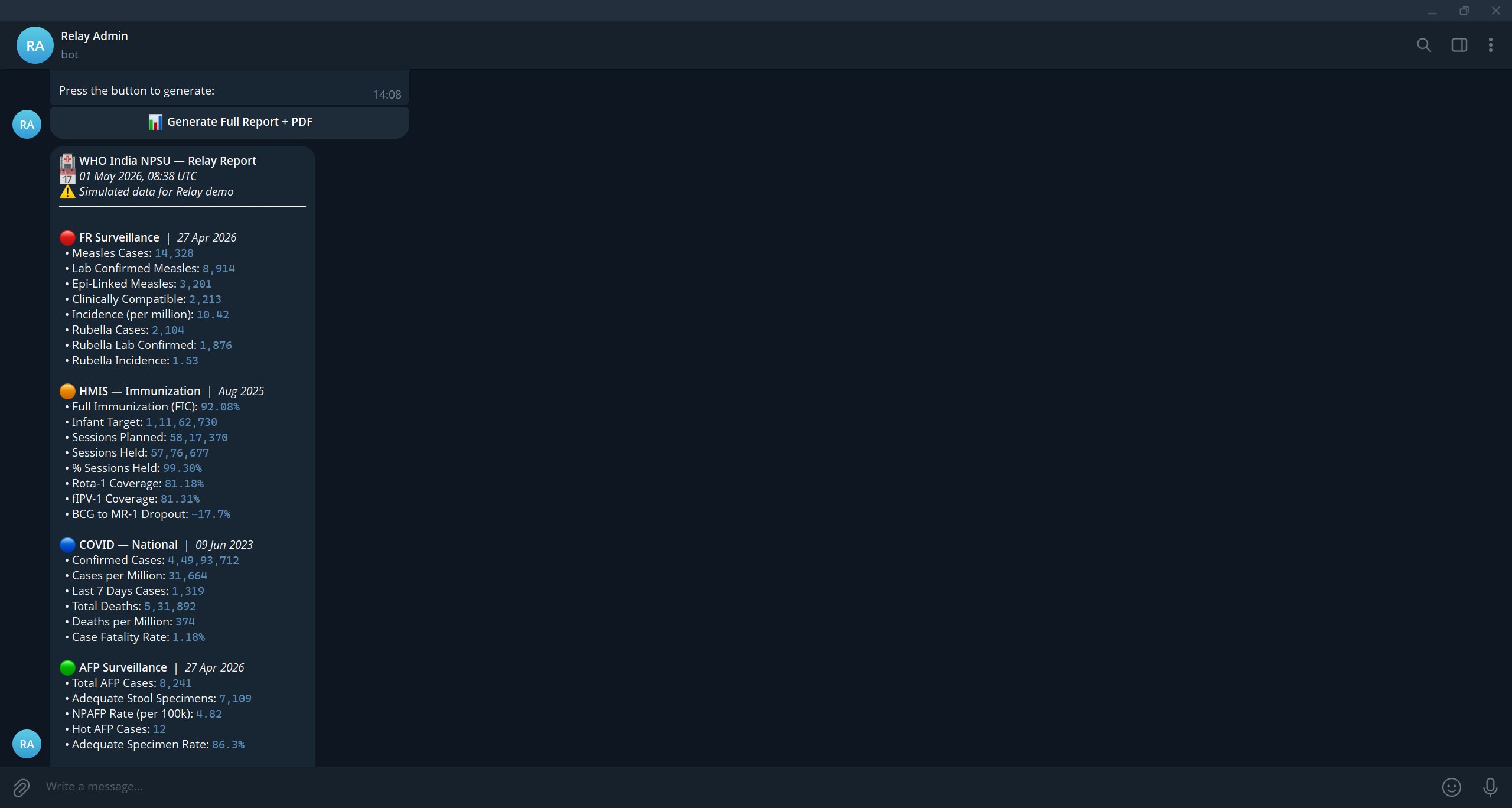
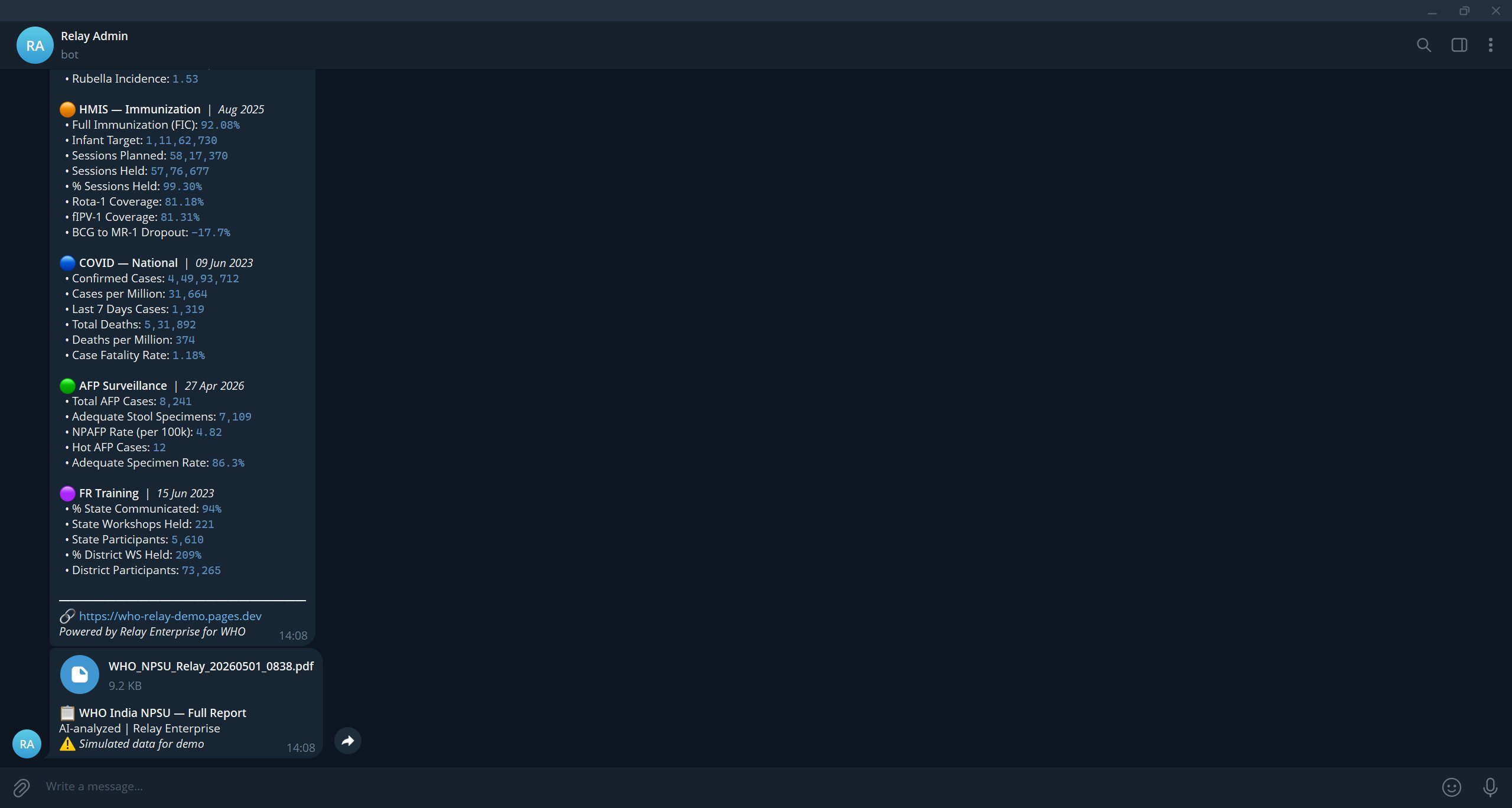
Relay is the system underneath a chat message. A non-technical user types /start into a Telegram conversation, presses one button, and receives a compiled, AI-analyzed, formatted PDF report aggregated from multiple data sources. The chat interface hides everything else.
The interesting work is what happens between the button press and the PDF: multi-source aggregation, LLM-driven executive summary, anomaly flagging, and channel-specific formatting. The Telegram interface is one of several adapters; the same backend can deliver to Discord, and Teams support is in progress.
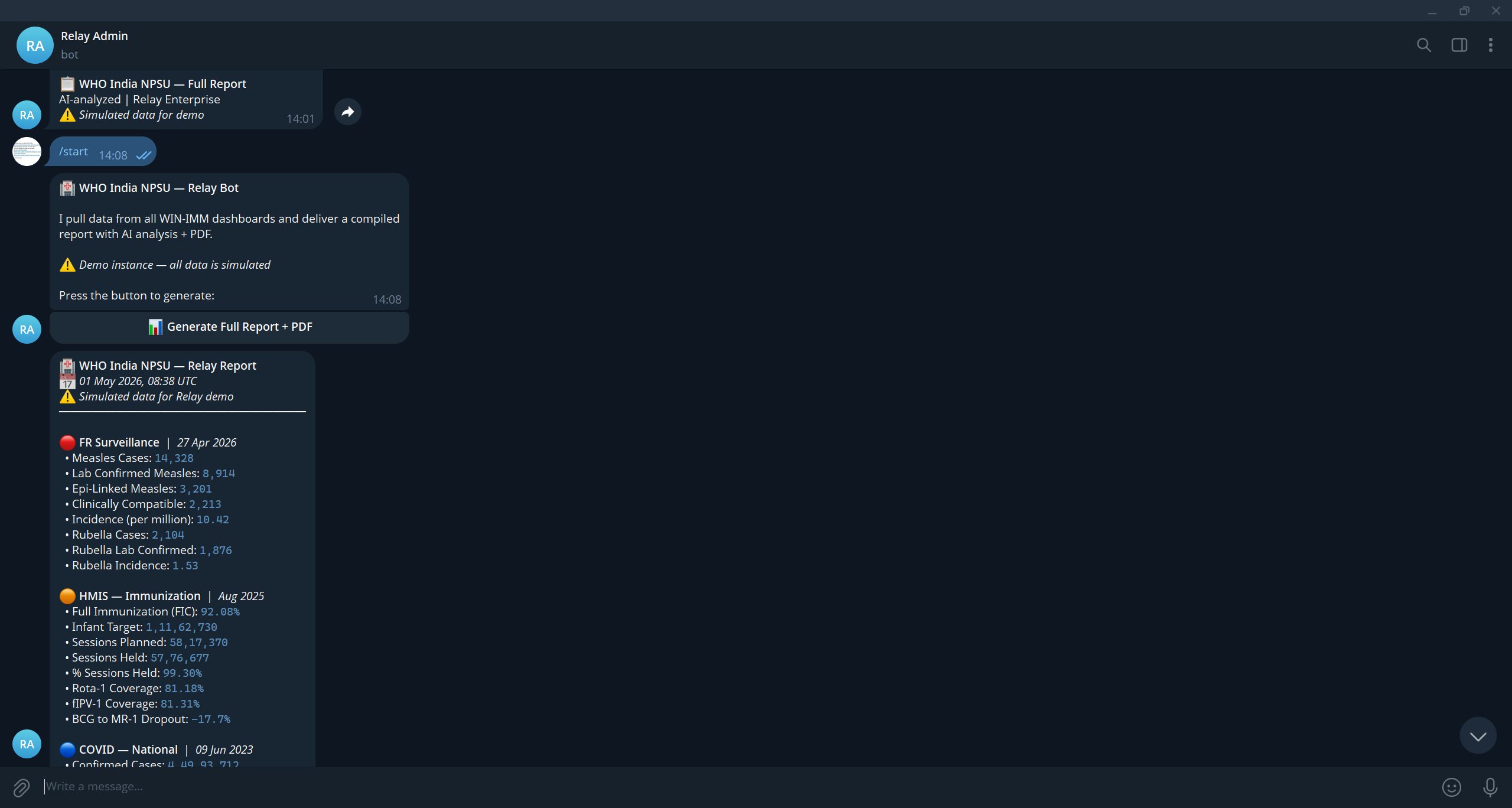

I built Relay as a working prototype demonstrating a channel-agnostic enterprise report system. The current demo is themed around public health surveillance: a domain where multiple dashboards (case reports, immunization coverage, sentinel surveillance, training rollouts) need to be aggregated, analyzed, and routed to decision-makers who do not log into dashboards.
All data shown in the demo is simulated. The system is real and production-shaped; the numbers are illustrative. The architecture is the deliverable.

Hub-and-spoke. A single backend pulls from N data sources, runs analysis, generates the artifact (PDF), and delivers it through M channel adapters.
Data sources Relay backend Channels ┌─────────────┐ ┌──────────────┐ │ Source A │──────┐ ┌──→ │ Telegram │ └─────────────┘ │ │ └──────────────┘ ┌─────────────┐ │ ┌────────────────────┐ │ ┌──────────────┐ │ Source B │──────┼──→│ Aggregator │ ├──→ │ Discord │ └─────────────┘ │ │ LLM analyzer │────┤ └──────────────┘ ┌─────────────┐ │ │ PDF generator │ │ ┌──────────────┐ │ Source C │──────┘ └────────────────────┘ └──→ │ Teams (WIP) │ └─────────────┘ └──────────────┘
Adding a new source means writing one adapter. Adding a new channel means writing one adapter. The aggregator, the analyzer, and the PDF generator stay the same. This is the same architectural pattern as Soup: one backend, many surfaces.
The compiled report is not just numbers. An LLM analysis pass runs over the aggregated data and produces a written executive summary, named critical alerts, and recommended actions. The output is constrained to specific structural slots (alerts go in alerts, summaries go in summary) and the underlying numbers are not regenerated, the LLM only writes about them, never over them.
Why this matters: the same architecture works for any domain where multiple data sources need to be compiled, analyzed, and routed to decision-makers who do not log into dashboards. Public health is the demo. Field operations, security, supply chain, customer success: same shape.